
Business Capability Management (BCM)
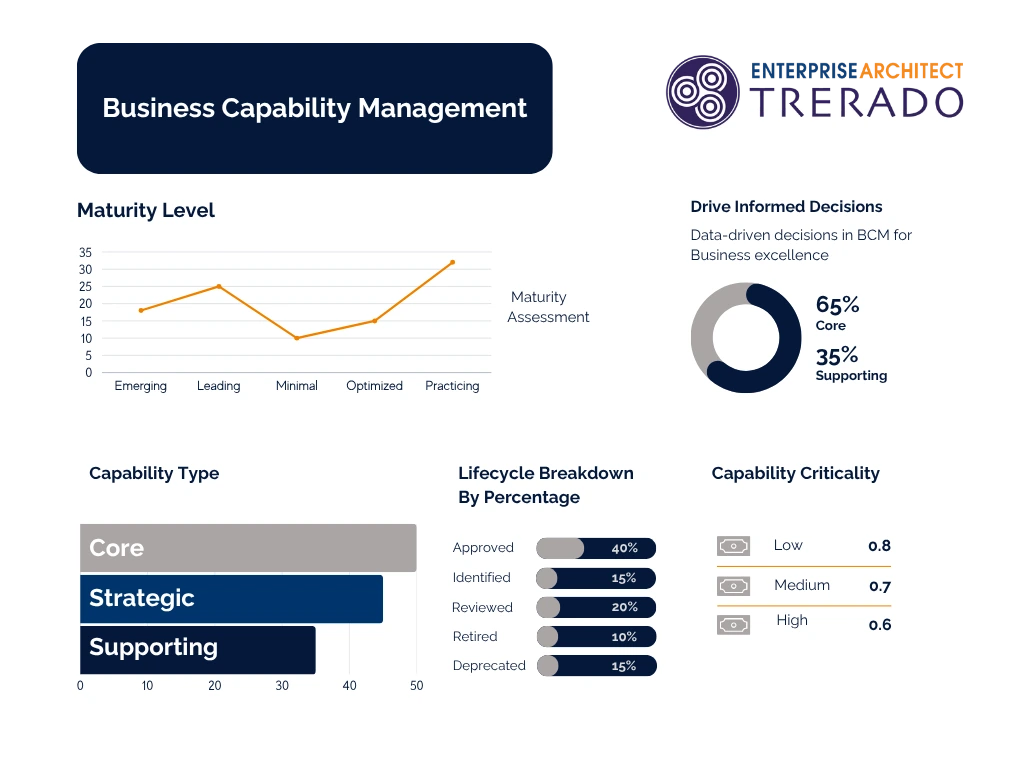
What is BCM?
Imagine how large organisations tackle complex challenges – Business Capability Management (BCM) is not simply a model or a collection of data, but a strategic information system.
Companies use BCM models to map out all their capabilities, paving the way for optimised collaboration and a holistic view of the organisation’s strengths. BCM clarifies an organisation’s capabilities and their interdependencies. This holistic view of the organisation’s capabilities enables architects to identify how different parts of the business are interconnected and to plan for the organisation’s long-term strategic growth.
The Business Capability Map (BCM) Configuration is an integral part of the Prolaborate offering and provides a ready-to-use introduction to business capability management. Thanks to pre-configured dashboards, use-case-specific features and an integrated Excel connection, organisations can begin managing their capability landscape immediately, without the need for complex implementation projects or additional development work.
The solution is based on a practical subset of ArchiMate, the international standard for modelling enterprise architectures, and extends this with frequently required information and proven best practices. This results in a powerful starter pack for Business Capability Management that delivers significant benefits straight away, whilst at the same time allowing for easy customisation to individual requirements.
The pre-configured approach significantly reduces implementation effort, costs and project risks. This enables teams to become productive more quickly and deliver value at an early stage. At the same time, the solution remains fully flexible: it can be used as is in its standard configuration, or gradually adapted to company-specific processes, governance requirements and information needs – right through to a fully bespoke BCM solution.
Why is Business Capability Management essential?
- Aligning an organisation’s capabilities with its strategic objectives.
- Modelling business capabilities helps to identify and manage potential risks, thereby reducing the impact of business interruptions and the associated recovery costs.
Cost Reduction
Significant savings in the six-figure Euro range in the event of IT incidents at company level. By adopting a competence-based approach, organisations can identify and mitigate technological risks, thereby significantly reducing the financial impact of IT incidents.
Operational Cost Optimisation
Optimisation of up to 20 per cent: A better understanding of capacity enables effective resource allocation, minimises duplication of effort and optimises workforce productivity, leading to significant savings in operating costs.
Efficiency Gains
Efficiency gains of 15 to 30 per cent: Improved business processes and optimised workflows contribute to significant efficiency gains, leading to streamlined operations and substantial cost savings for companies.
Reducing Time to Market
A 20 to 50 per cent faster time-to-market for new products and services. Agile organisations benefit from an early market launch, accelerate the introduction of new products and services, and ultimately increase turnover and overall cost efficiency.
Business Capability Management (BCM) – Dashboard Features
Get started with a Business Capability Management Solution and a comprehensive Accelerator Package that makes it easy for users to get started. Dive straight into managing your Capability Landscape – with the ‘The Essential Architecture’ (TEA) Toolkit, which is based on industry-wide best practices and insights from executives worldwide.
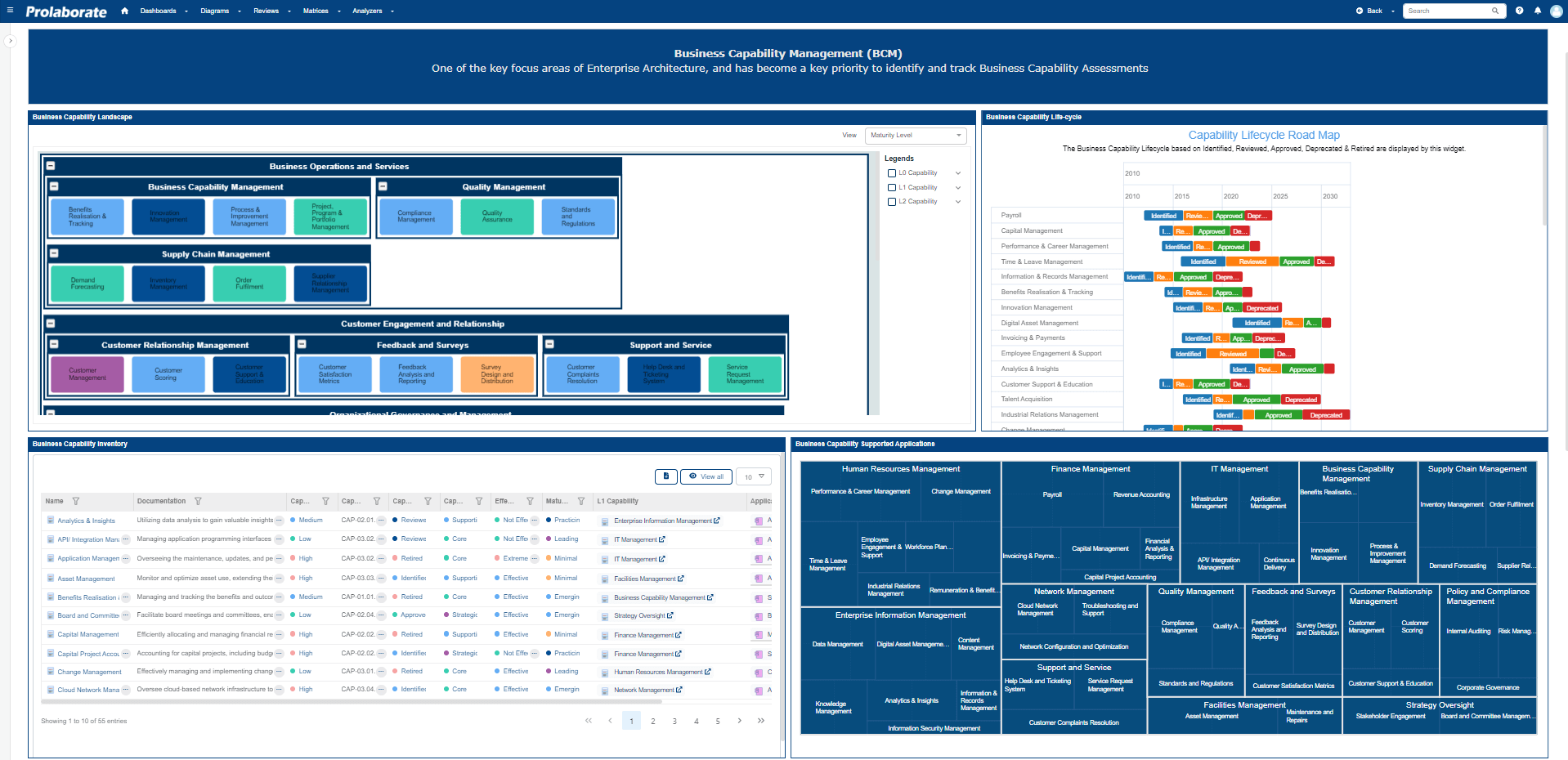
Sparx Architecture Platform features to support your BCM use cases
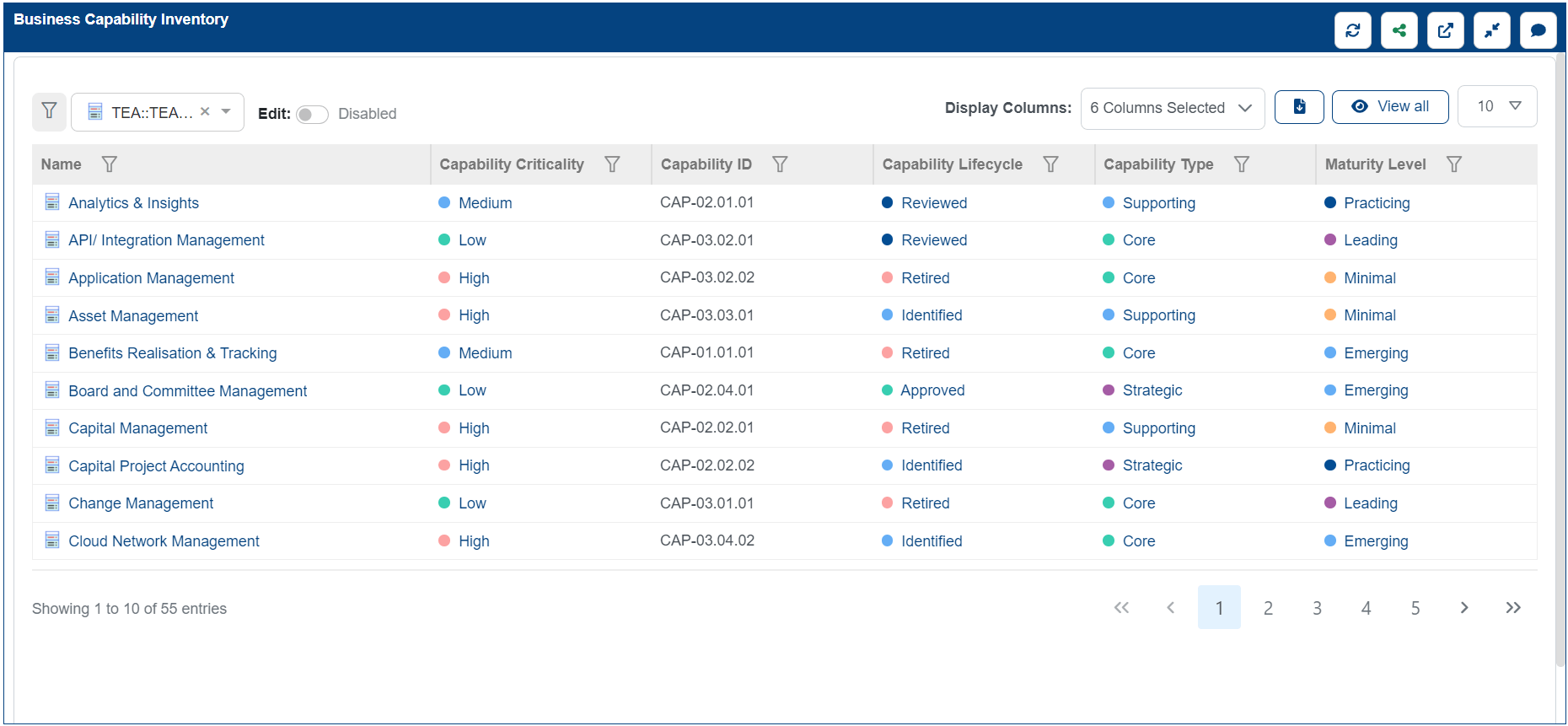
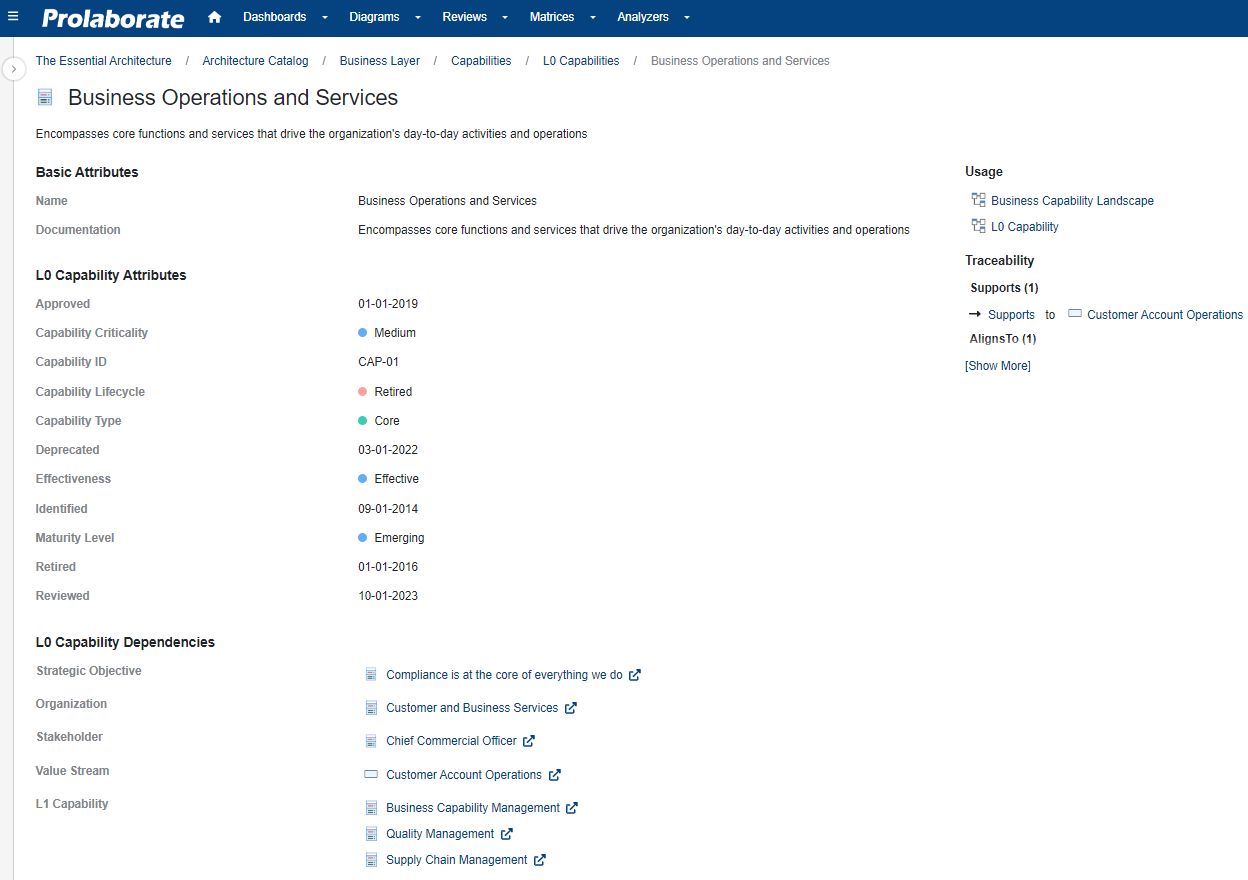
Catalogue your Capability Inventory
- Start by importing existing business capabilities, strategic objectives, value streams, applications, stakeholders and organisational information from Excel, or connect to your external systems via the RESTful API.
- Display a clear list of capabilities, along with all key attributes and dependencies.
- Filter, segment and analyse the data to identify the capabilities relevant to you and examine them in detail.
- View and update capability information in role-specific views.
- Map capabilities to their dependencies, such as strategic objectives, value streams, stakeholders, organisations, applications and other key architectural constructs.
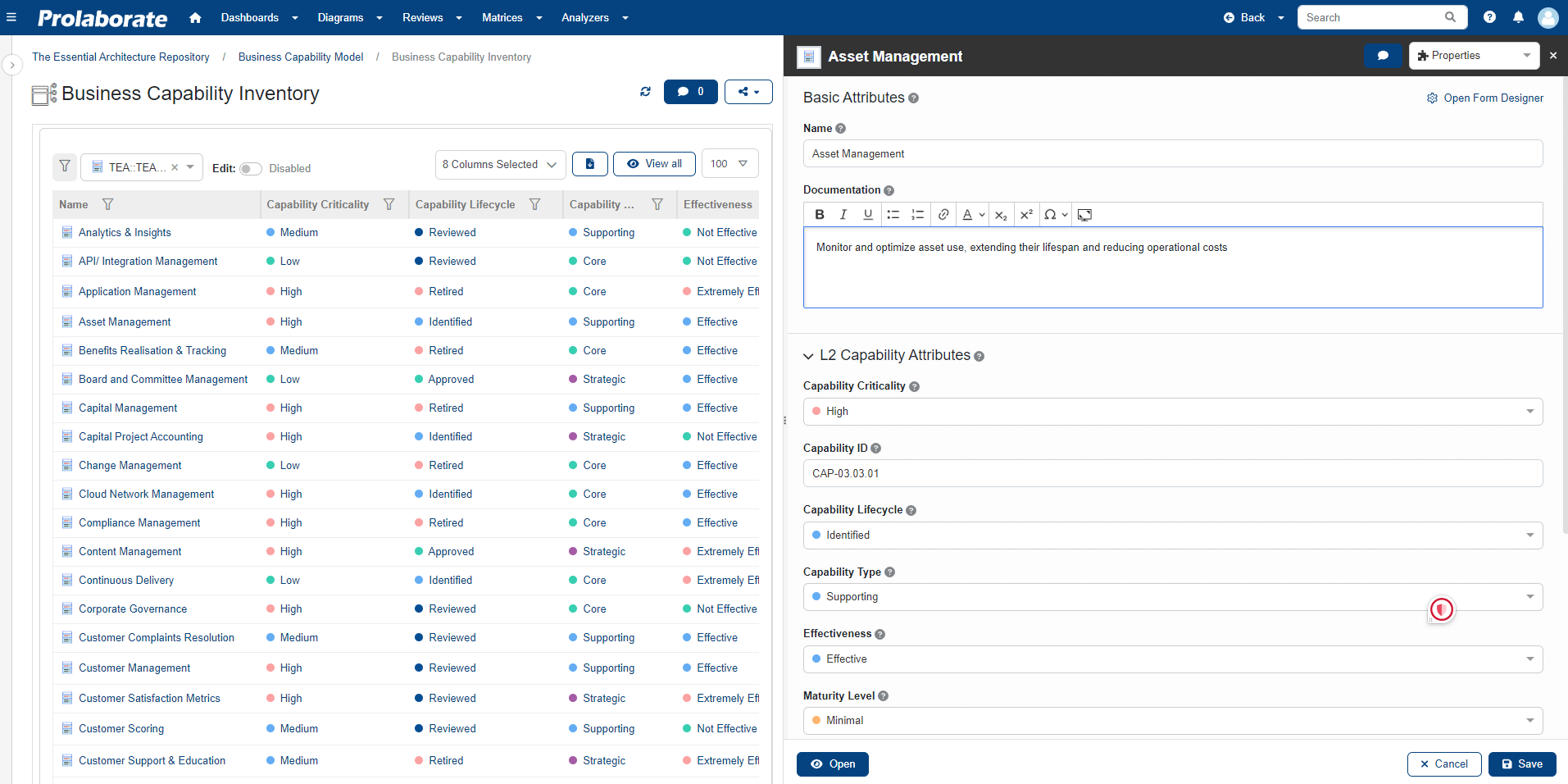
Enable an insightful Analysis of Capabilities
- Comprehensive analytical tools that help answer key business questions.
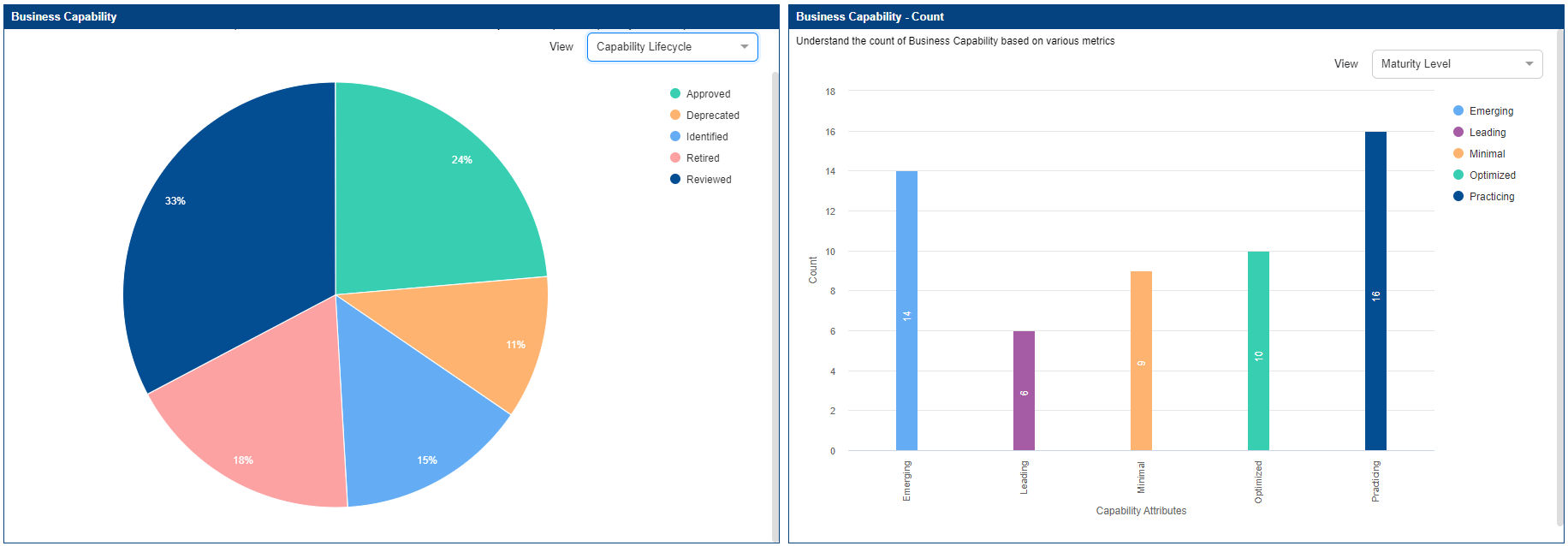
- Identify the number of skills from various perspectives to track the effectiveness of your business investments.
- Carry out assessments based on various skill characteristics to determine the lifecycle and maturity level of skills as part of the rationalisation initiative.
- Demonstrate how your capabilities support and enable the business by linking them to the value streams and strategic objectives that meet the organisation’s requirements.
- Link capabilities to the artefacts that support and influence the respective capability within the transformation programme.
Advanced Roadmapping
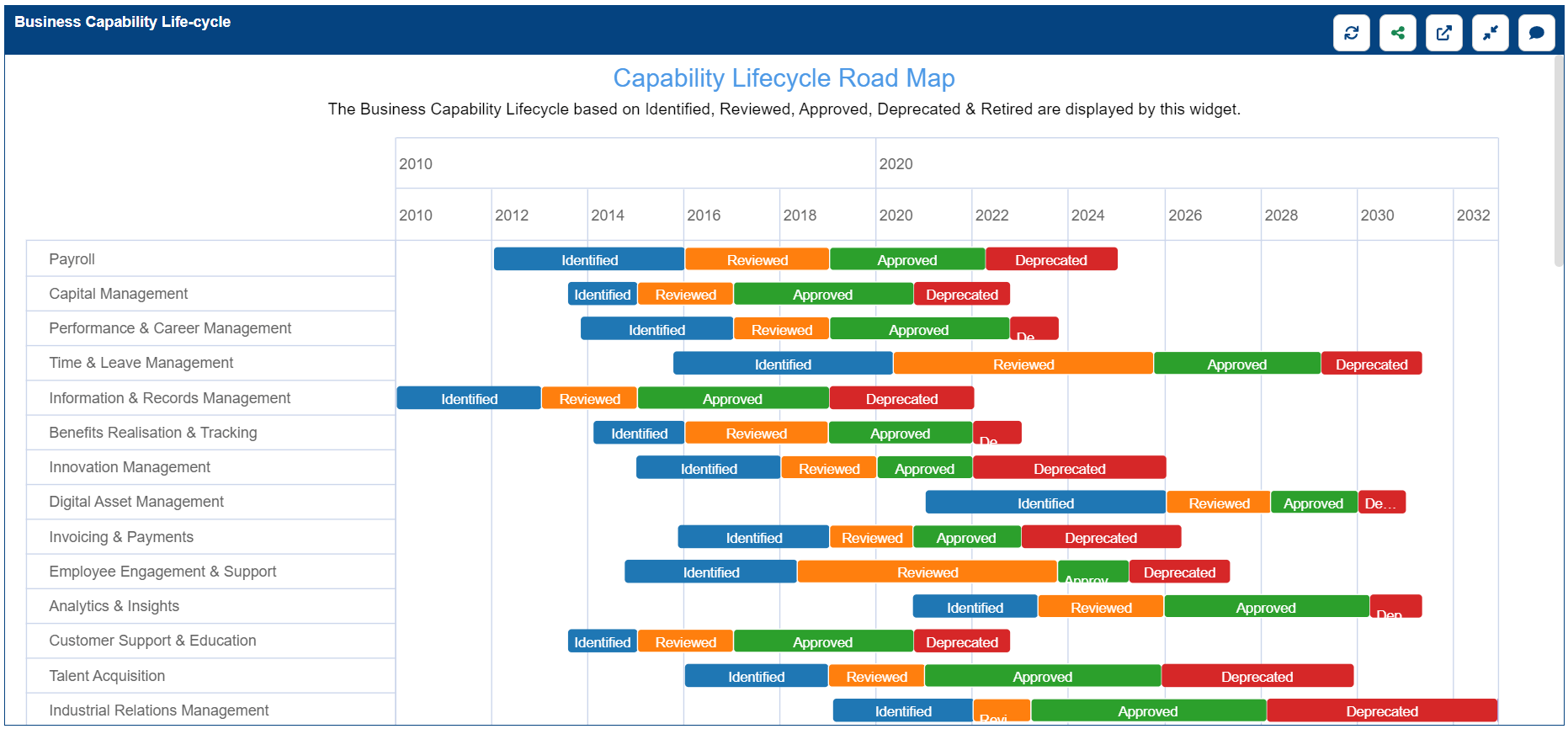
Create, present and communicate transformation roadmaps that illustrate the lifecycle of enterprise-wide capabilities and the progress of the transformation. This overview enables stakeholders to make decisions whilst taking into account a wide range of factors, such as changes in the market, corporate strategy, objectives and architecture.
The extended Capability Roadmap is a key aspect of Business Capability Management. The Roadmap offers the following benefits:
- It provides stakeholders with transparency to monitor and track the status of transformations and the lifecycle.
- Numerous factors can bring about changes in the lifecycle of capabilities and projects. The Roadmap illustrates how capabilities, projects and applications will evolve over various time horizons.
- The Roadmaps can be broken down according to various capability attributes to provide a broader context for decision-making.
- The scope of Capability Management Activities is based on various capability attributes, such as criticality, maturity level, capability type, effectiveness, lifecycle and much more.
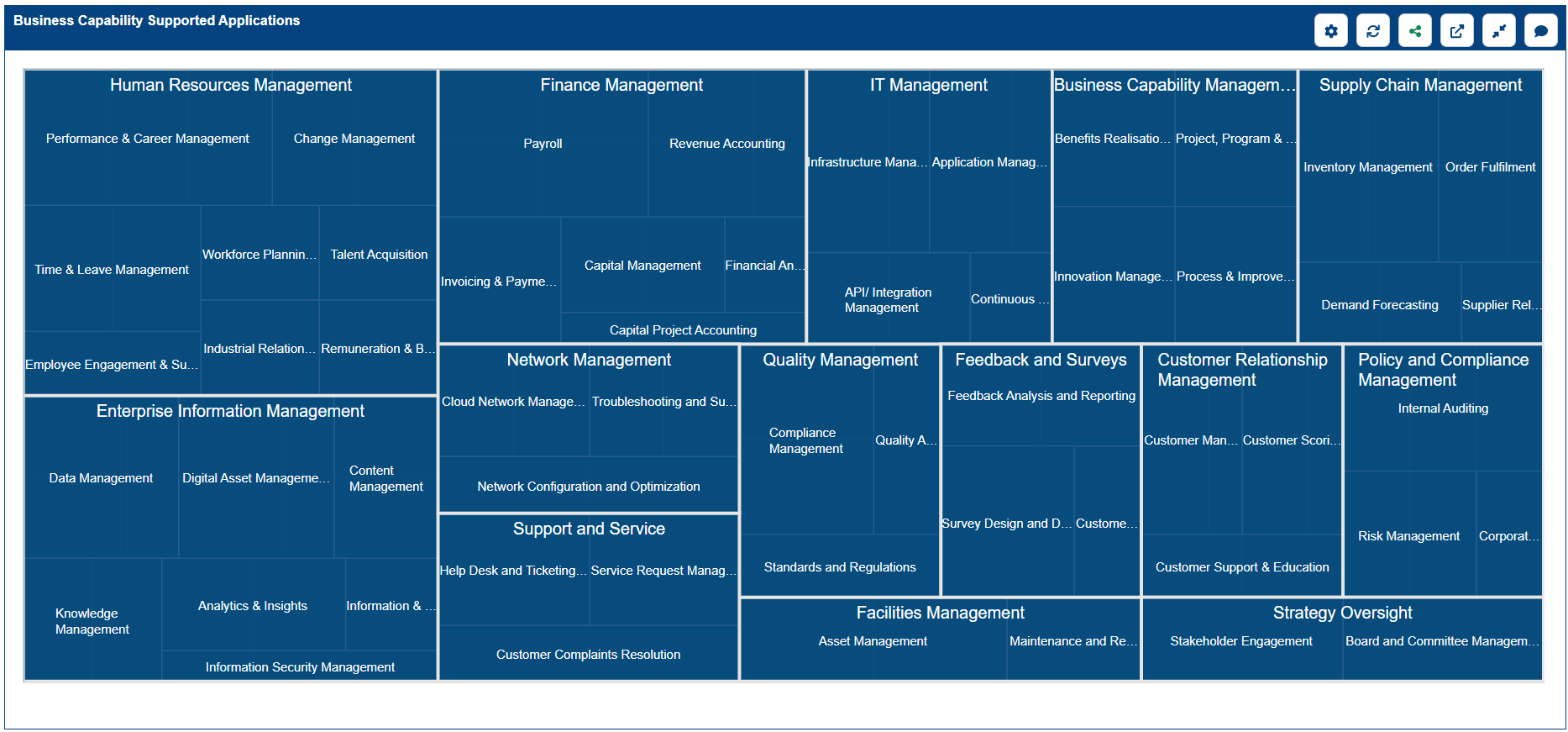
Rationalisation Perspectives Tailored to Design
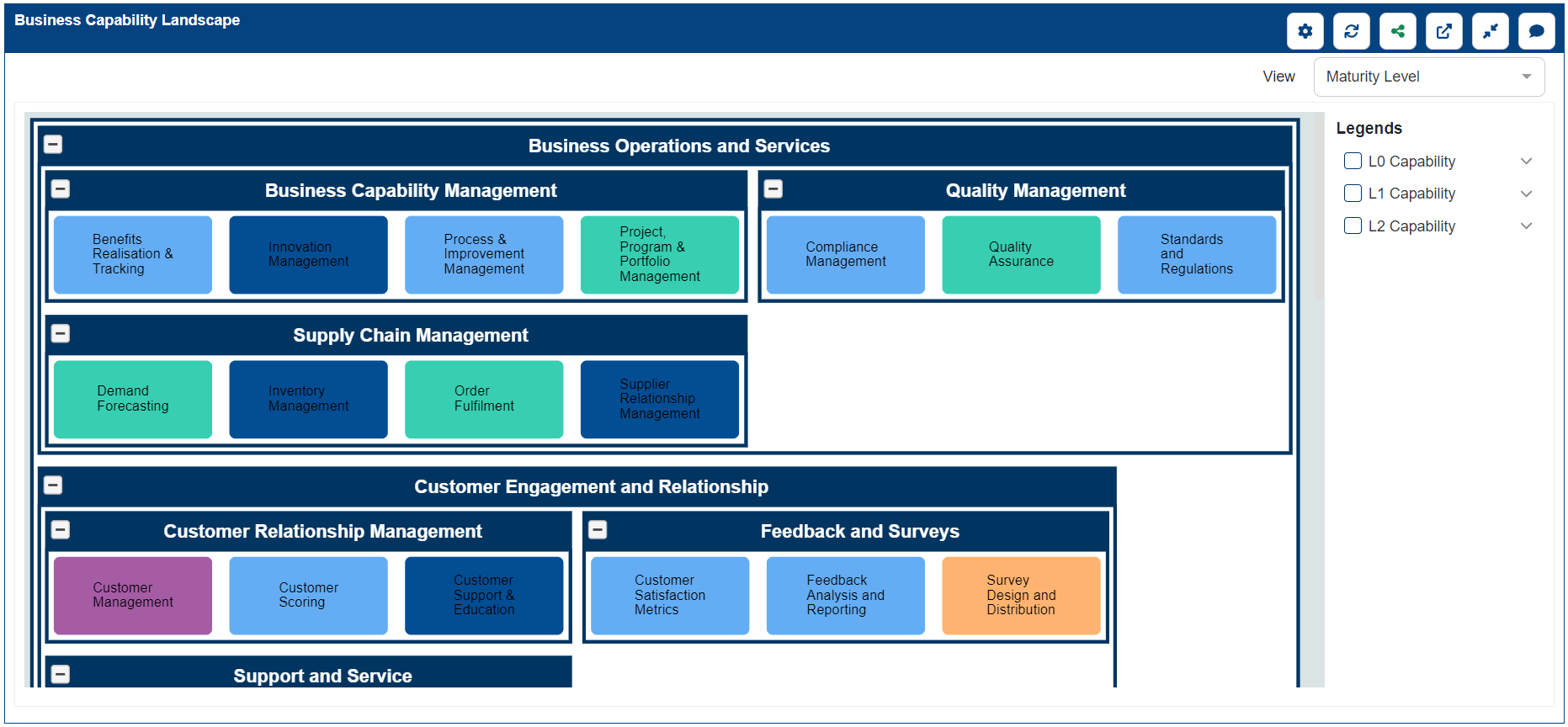
Use configurable dashboards to develop the most appropriate rationalisation perspectives for stakeholders’ specific expectations.
- Use the Competence Hierarchy Map to gain an understanding of the business competence landscape from different perspectives.
- Use the Heatmap to visualise the areas supported by the business competences.
Business Capability Management (BCM) – Accelerator
The solution for assessing business capacity, featuring a comprehensive Accelerator Package that makes it easy for users to get started. Dive seamlessly into managing your capacity landscape – with the ‘The Essential Architecture’ (TEA) Toolkit, which is based on industry-wide best practices and insights from executives worldwide.
With the help of the BCM Accelerator package, architects can quickly begin modelling the data and present stakeholders with a comprehensive analysis of Business Capability Management.
The Accelerator package includes the following:
- Well-standardised metamodel
- Bespoke MDG profiles
- Model templates
- Excel spreadsheet
- Import profiles
- Model created
- Prolaborate_BCM dashboard
Get started easily
With the included BCM Accelerator, you can get straight to work without any delays.
Pre-configured dashboards, pre-defined attributes and the Excel integration deliver results that are ready to use straight away and significantly reduce the implementation effort. This saves time, lowers project costs and ensures a quick return on investment.
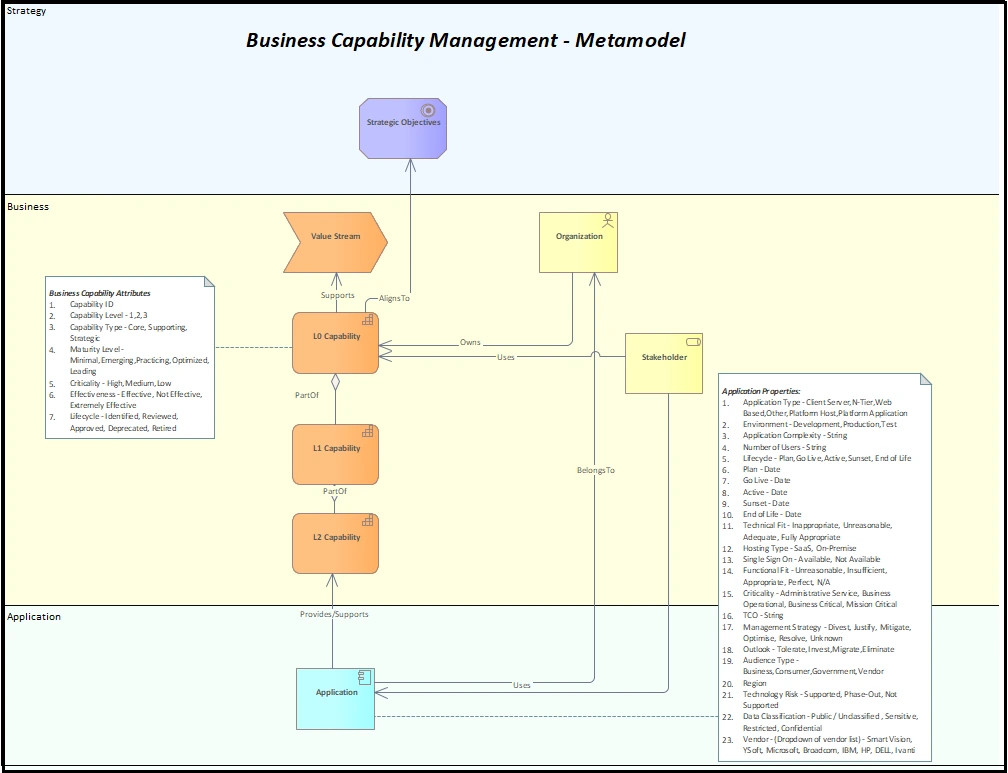
Metamodel
Business Capability Management is carried out via the metamodel view, which focuses on business capabilities and their required attributes and relationships.
Sparx Systems has standardised a Metamodel for Business Capability Management that helps architects create meaningful reports that answer stakeholders’ questions. It serves as a blueprint for designing a BCM-based model. The following figure shows the metamodel.
MDG Profile – a bespoke toolset
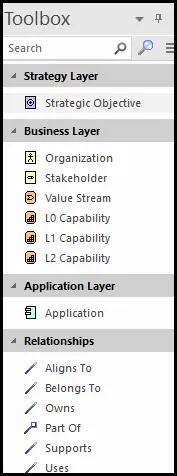
Sparx Systems has developed a specialised toolkit (MDG-Profile) for Business Capability Management, whose model governance and constraints are based on the metamodel and correspond to the characteristics and relationships of business capabilities.
MDG-Profile enables users to build the model with a clearly defined structure and relationships in accordance with the metamodel. By activating the BCM profile in the model, users gain access to a bespoke toolset and predefined patterns.
The customised toolset helps users to easily create elements and their connections as specified in the metamodel. This enables users to quickly design a BCM model with the necessary connections in accordance with the metamodel.
Model Patterns
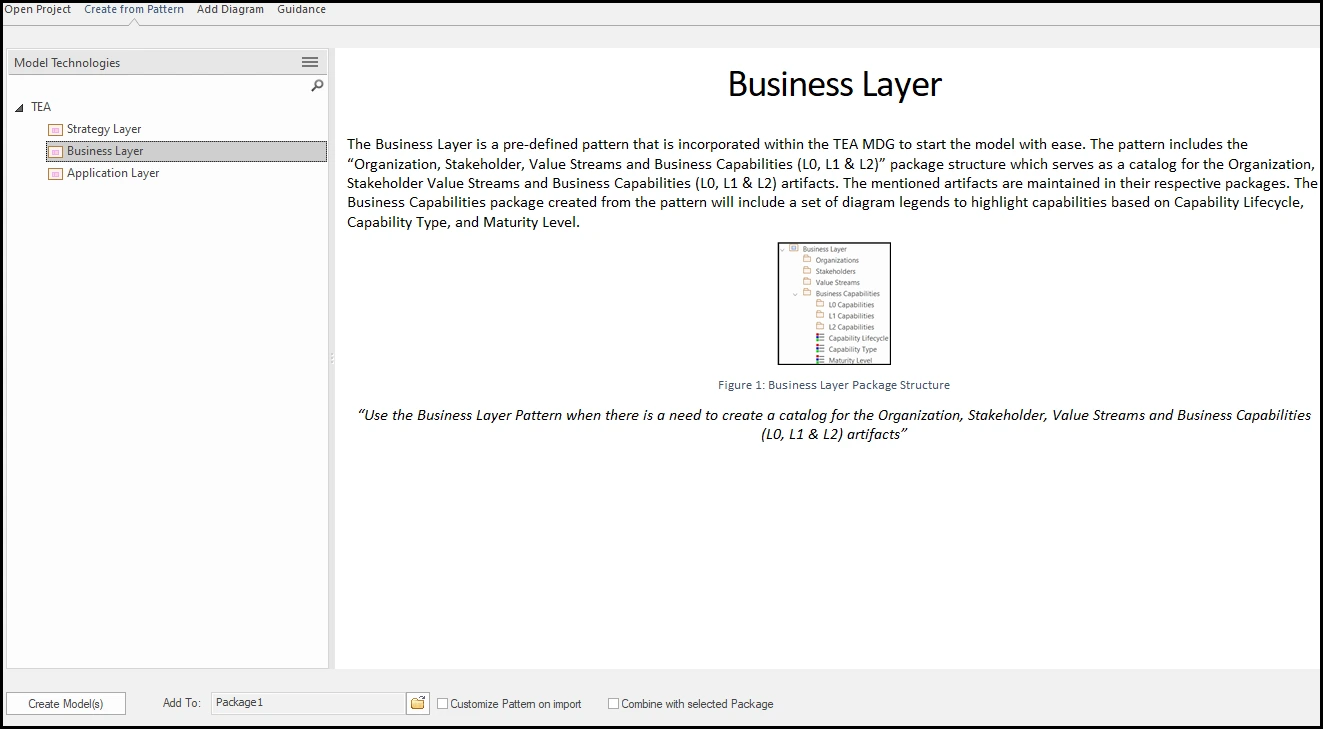
The predefined model patterns enable users to easily begin modelling the package structure in line with Business Capability Management. The predefined patterns are integrated into the MDG profile. When creating models, users can choose from four different sets of patterns.
The predefined templates are listed below:
- Strategy Layer
- Business Layer
- Application Layer
ENTERPRISE ARCHITECT TRERADO Business Capability Management Solution
Visualise and manage your organisation’s capabilities using Enterprise Architect Trerado’s unified platform to drive strategic growth, collaboration and resilience. Gain comprehensive insights into your organisation’s strengths to make informed decisions and secure a long-term competitive advantage.
Benefits of Enterprise Architect Trerado BCM
Empower organisations with Enterprise Architect Trerado BCM to define, visualise and enhance their business capabilities, thereby driving strategic alignment and growth.
- Comprehensive Capability Management
- Informed Business Decisions
- Strategic Capability Planning
- Enhanced Collaboration with Stakeholders